제롬샤제 《Spirit Session》
Jérôme Chazeix 《Spirit Session》
2026.10.15.(Thu) – 10.25.(Sun) 13:00–19:00
SPACE TUM | 2F, 57 Mangwon-ro, Mapo-gu, Seoul
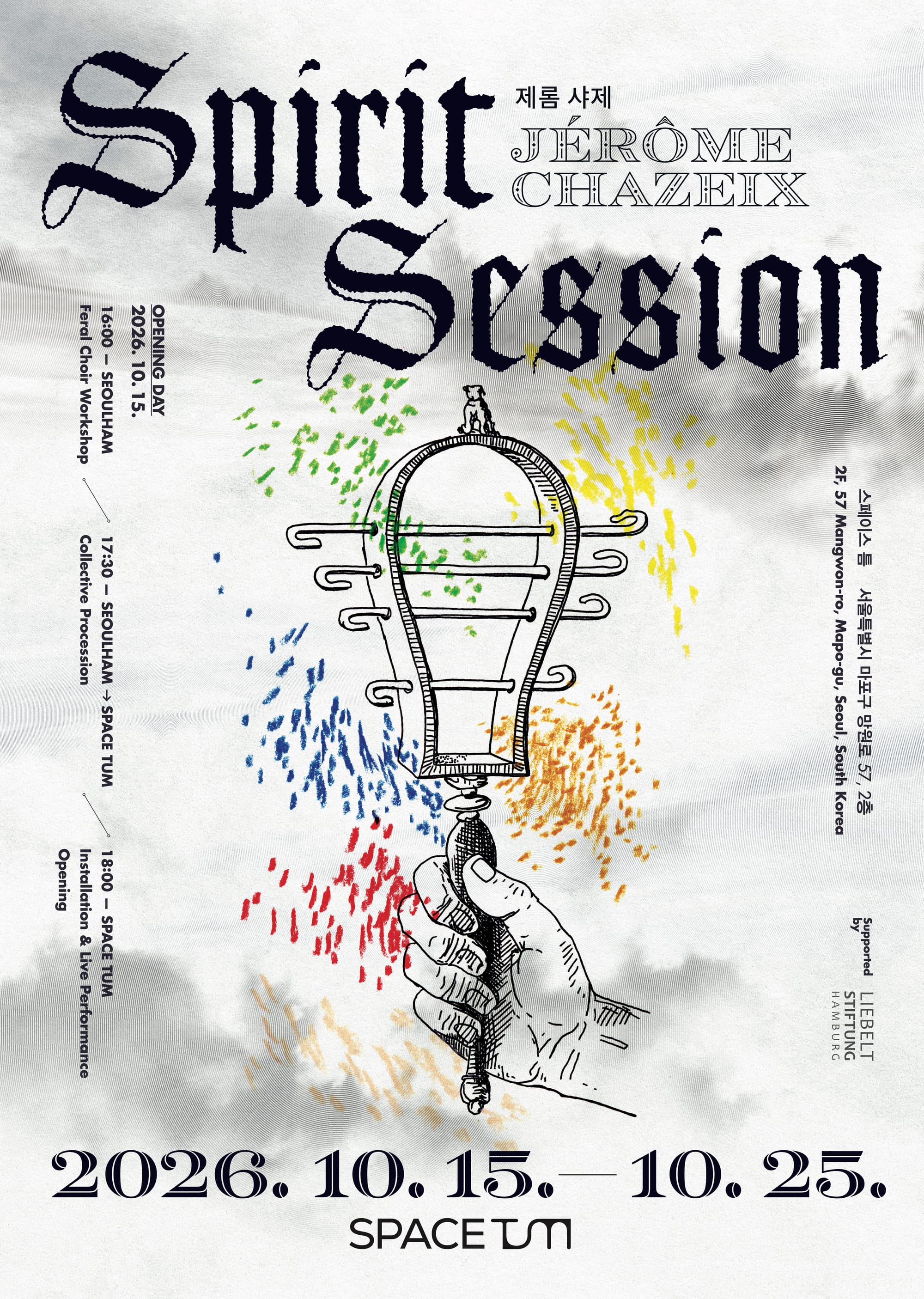
서로 다른 시대와 장소에서 건너온 이미지들이 천 위에서 다시 만난다. 중세의 이미지와 의례적 몸짓, 수수께끼 같은 손, 환상적인 생명체, 오래된 악기와 상징들은 하나의 역사나 문화를 재현하기보다 서로 다른 기억과 감각이 공존하는 하나의 시각적 환경을 이룬다.
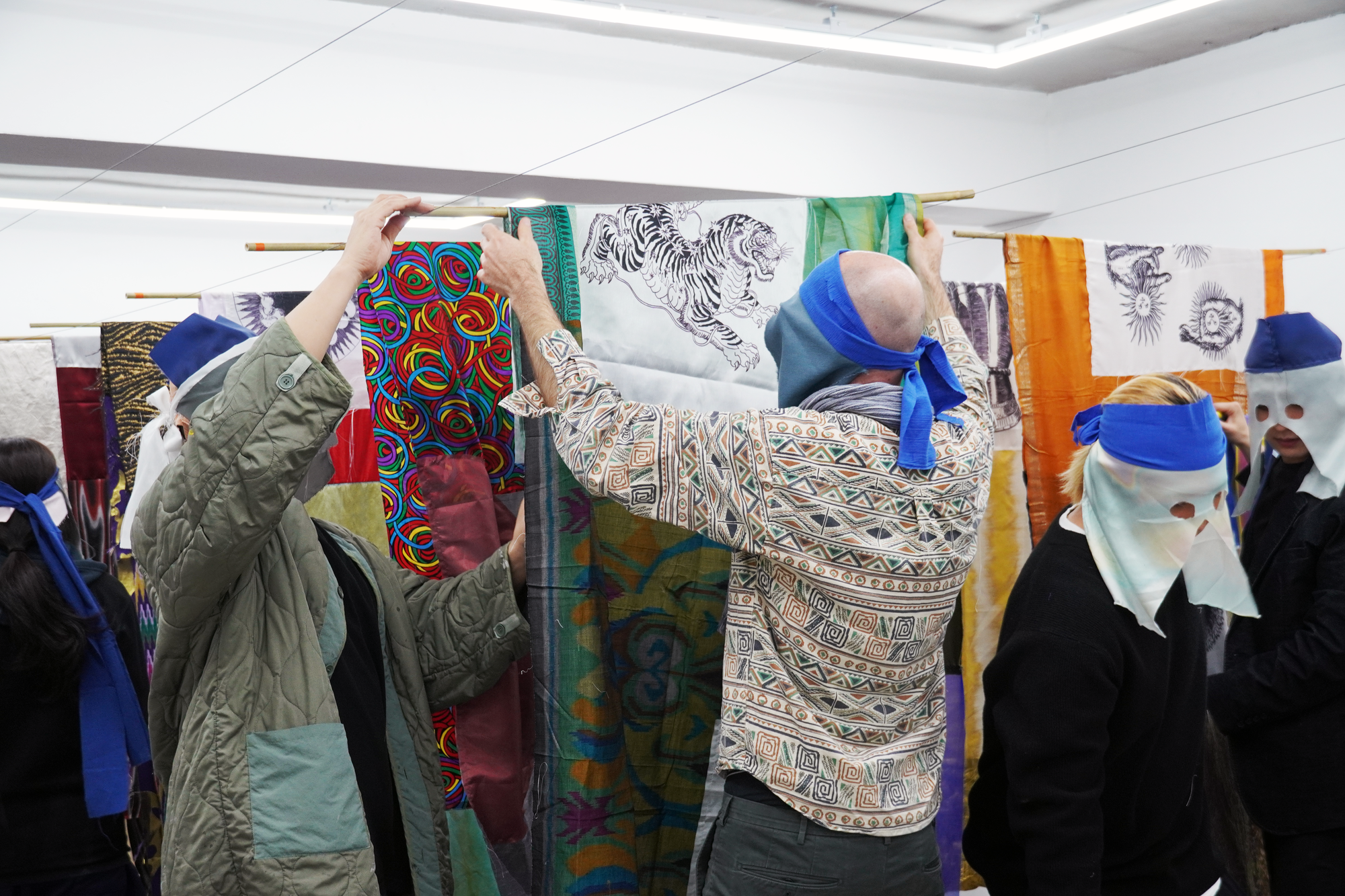
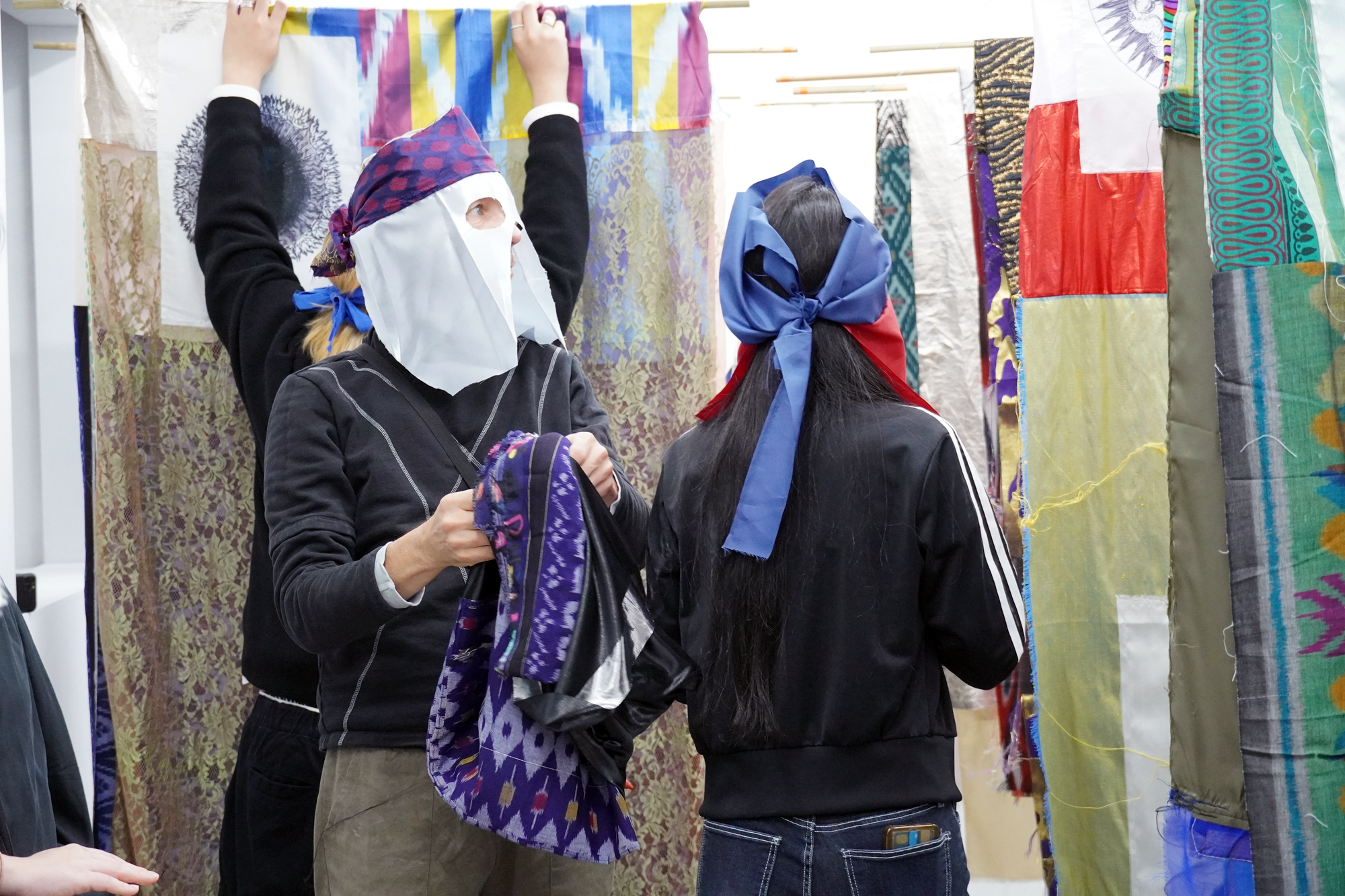
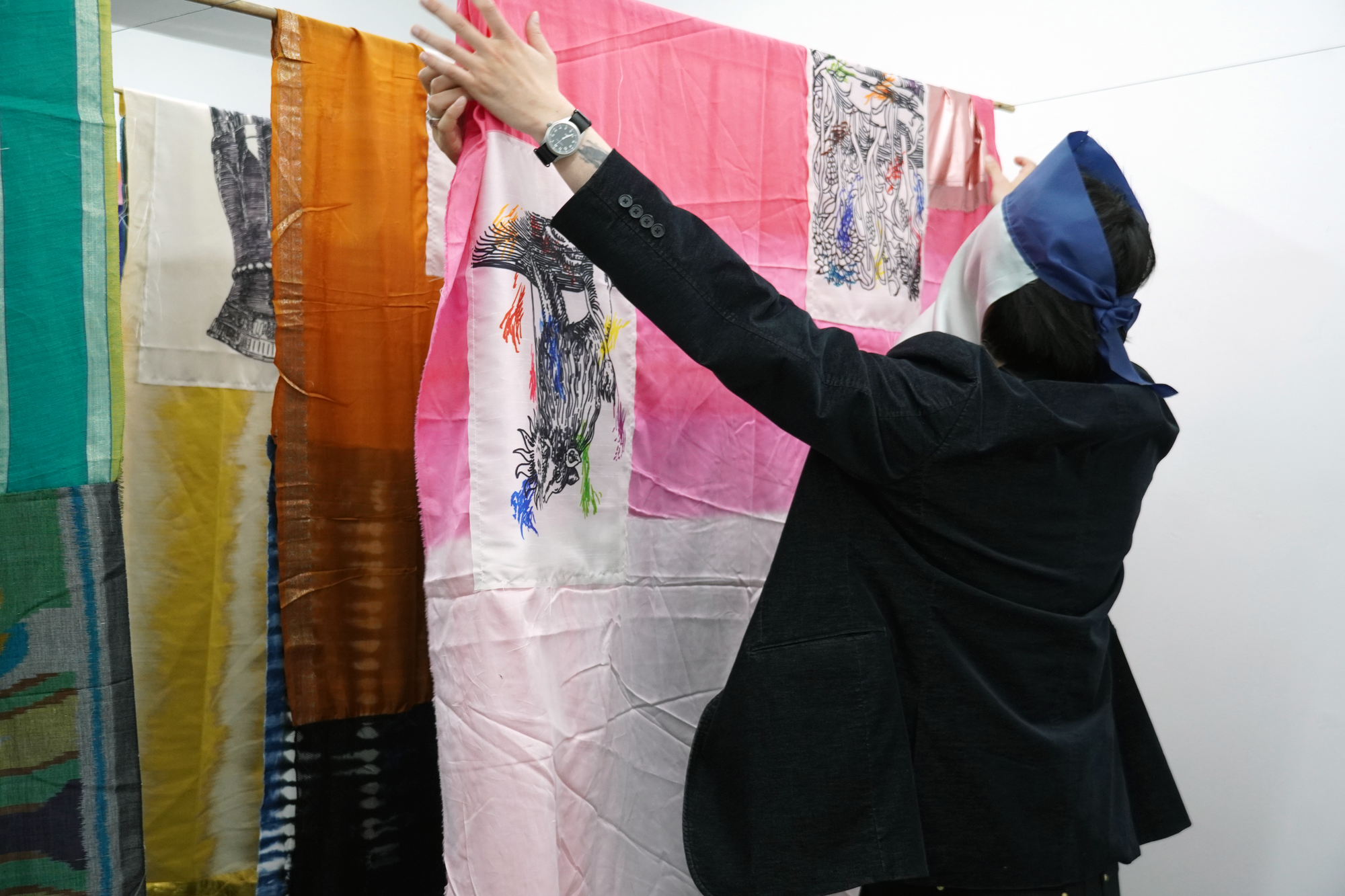
제롬 샤제(Jérôme Chazeix)는 이러한 이미지들을 드로잉으로 옮기고, 다시 직물 위에 인쇄한다. 여기에 작가가 일본, 인도네시아, 인도, 중국 등 여러 지역을 여행하고 레지던시에 참여하며 수집해온 사롱과 사리 조각 등의 직물이 더해진다. 서로 다른 시간과 장소를 품은 천들은 각각 하나의 패널이 되고, 다시 이어지고 겹쳐지며 공간을 가로지르는 커다란 설치로 확장된다.
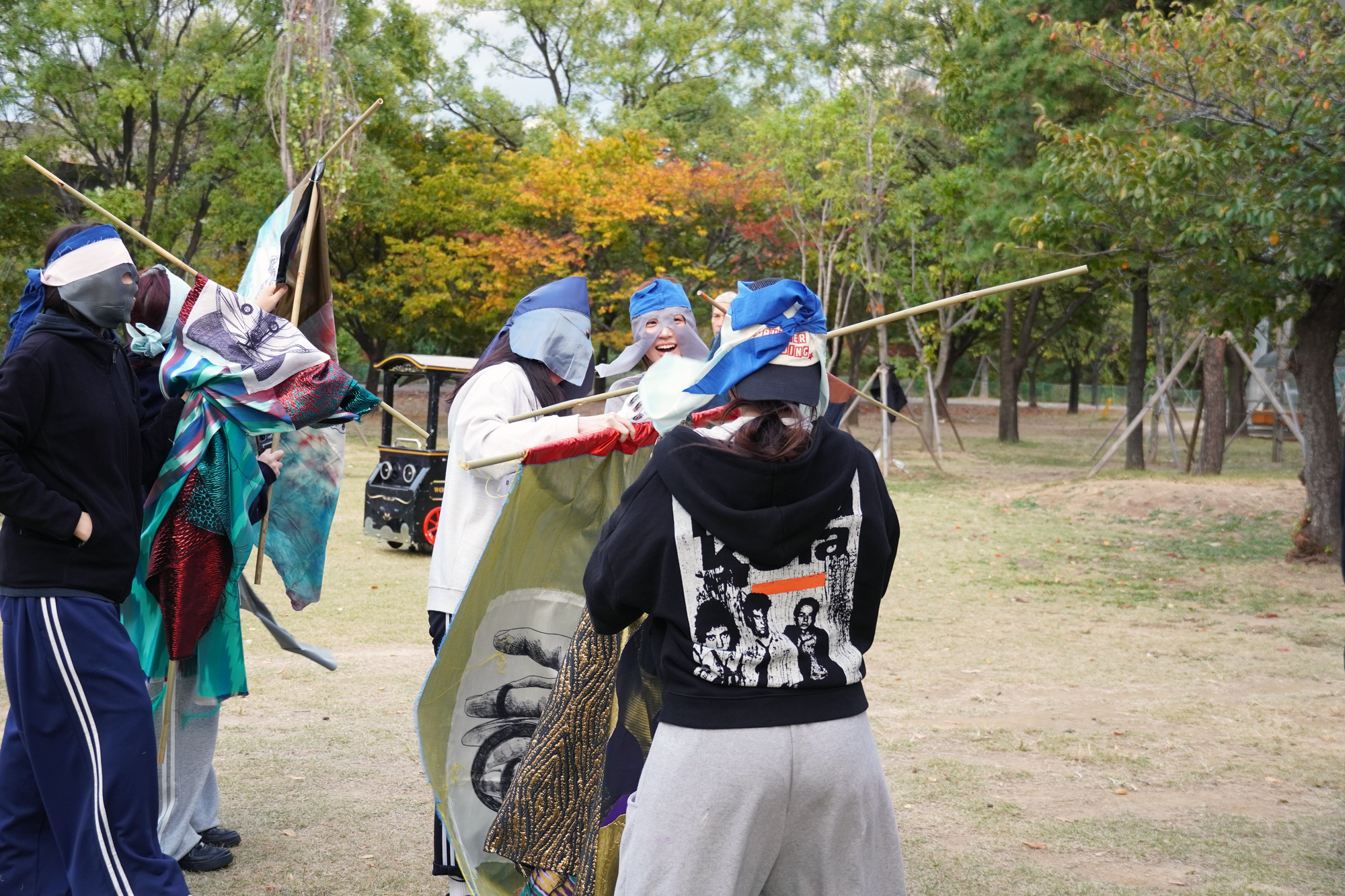
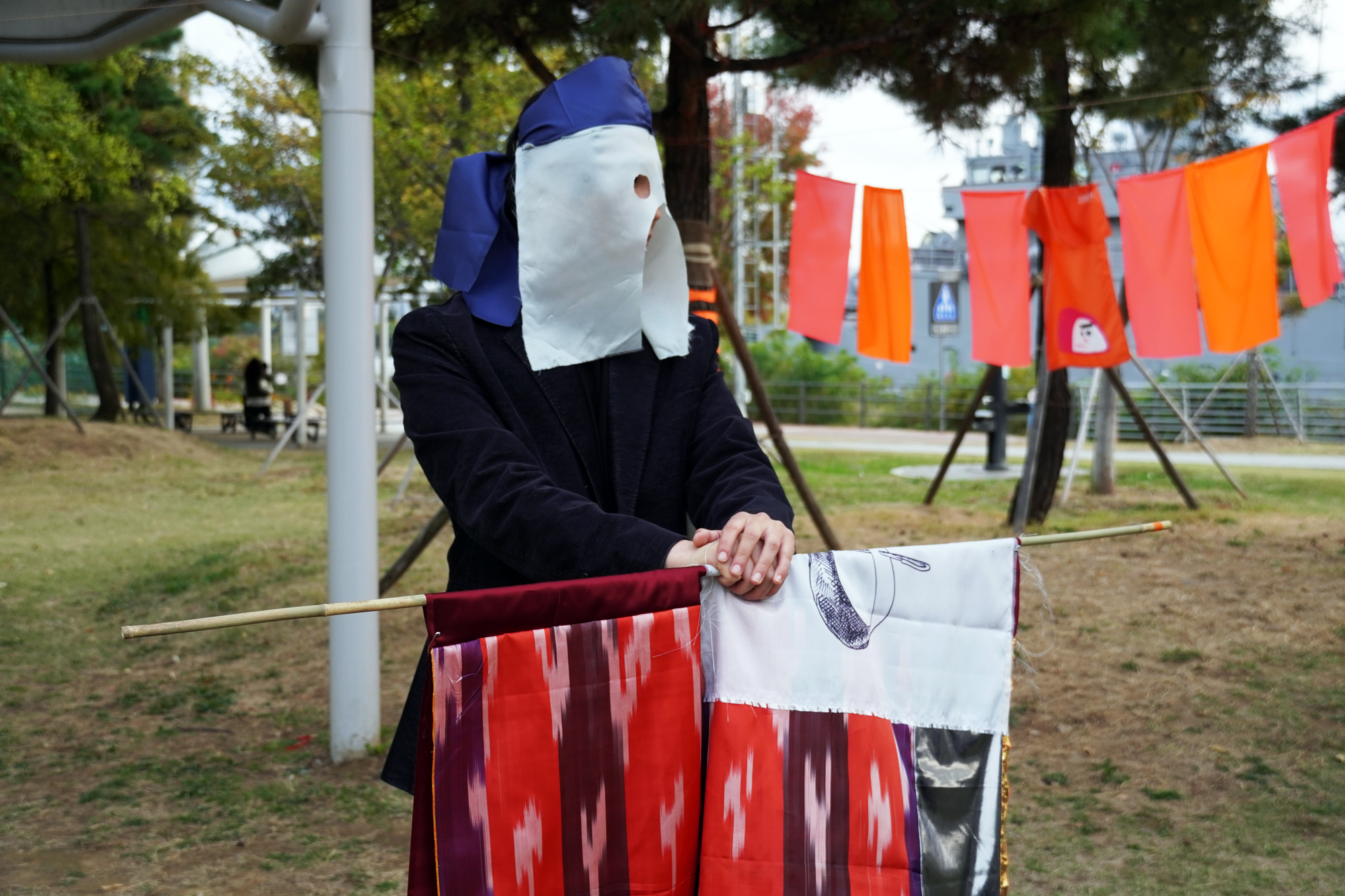
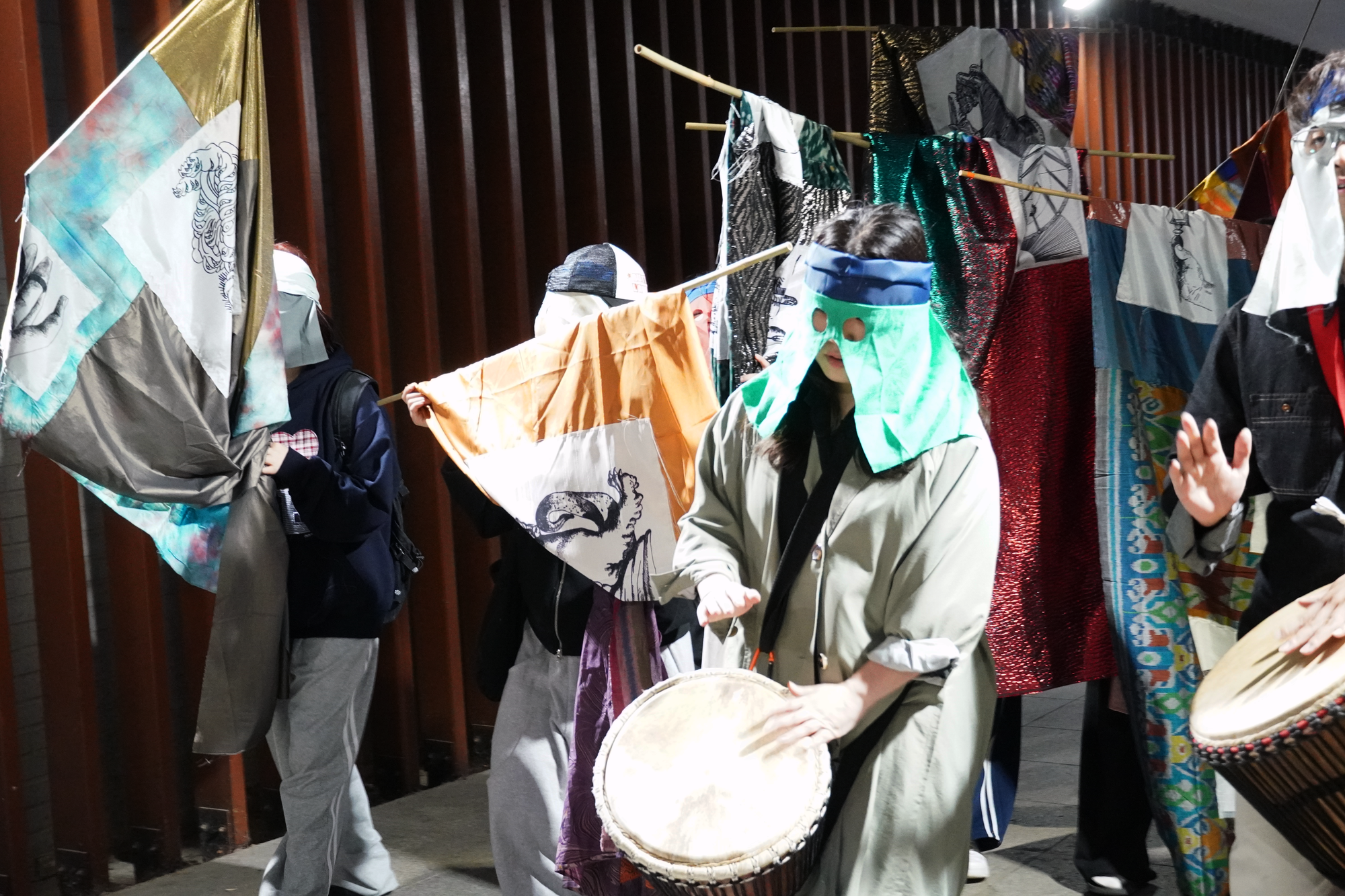
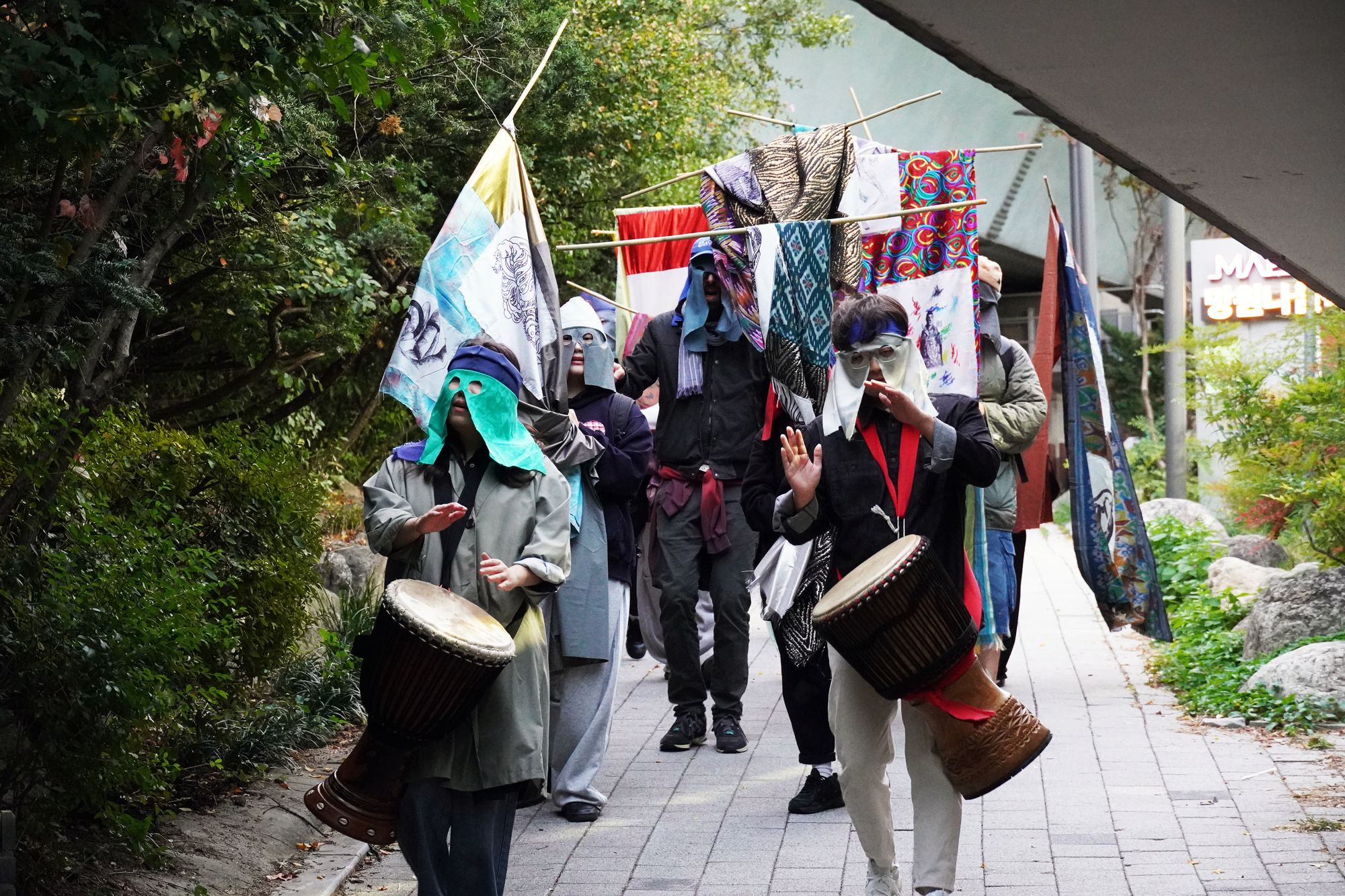
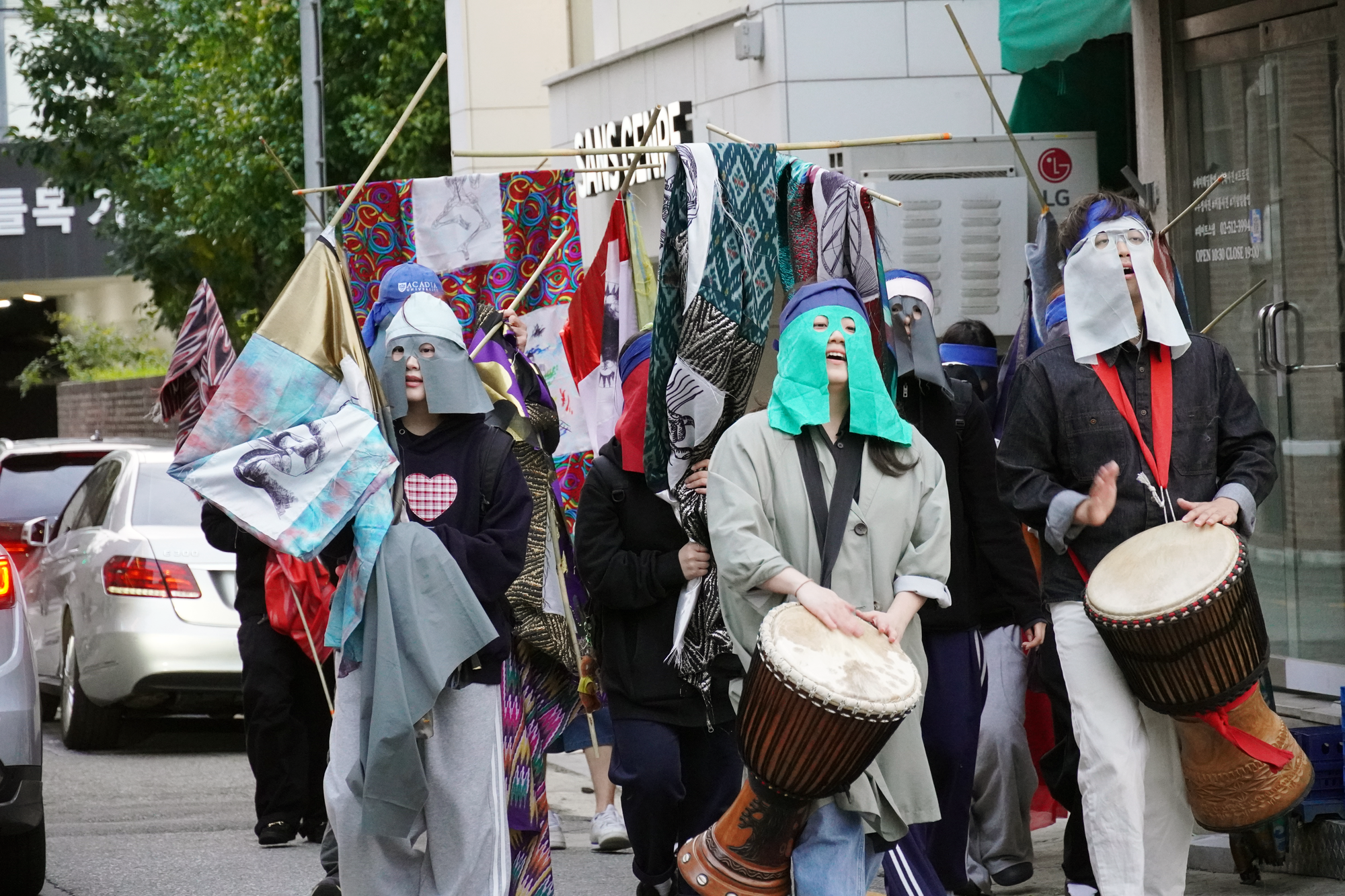
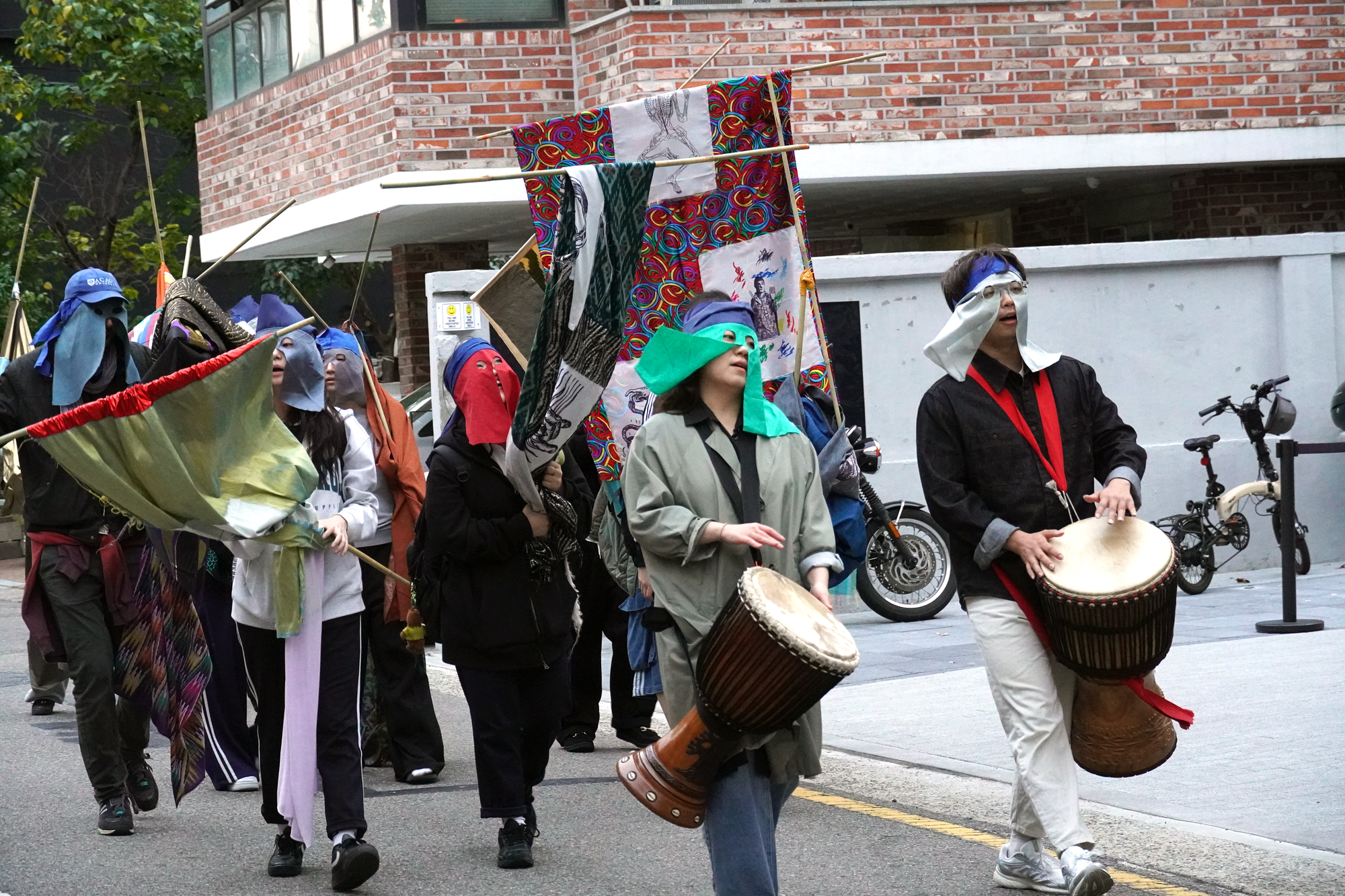
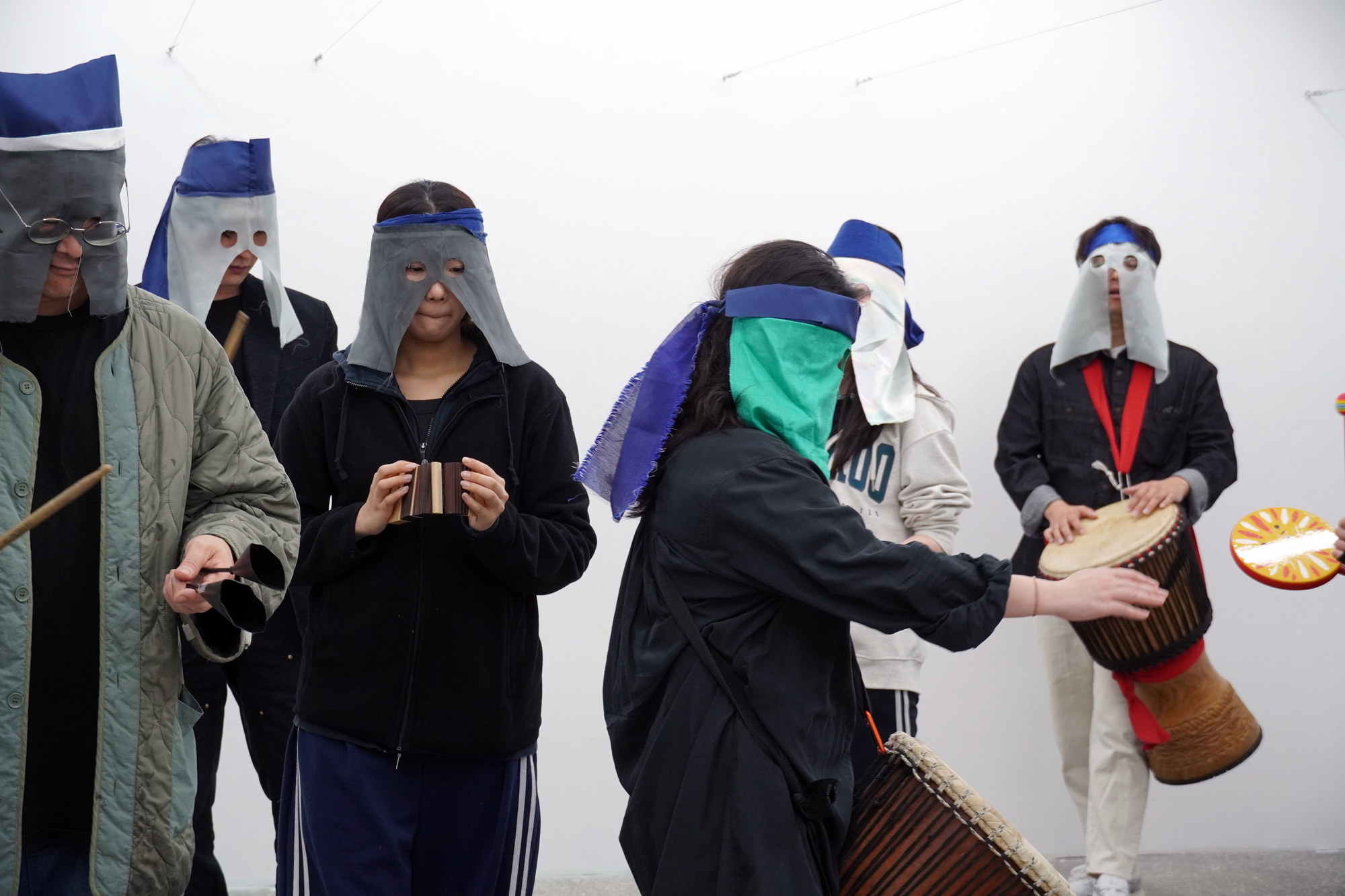
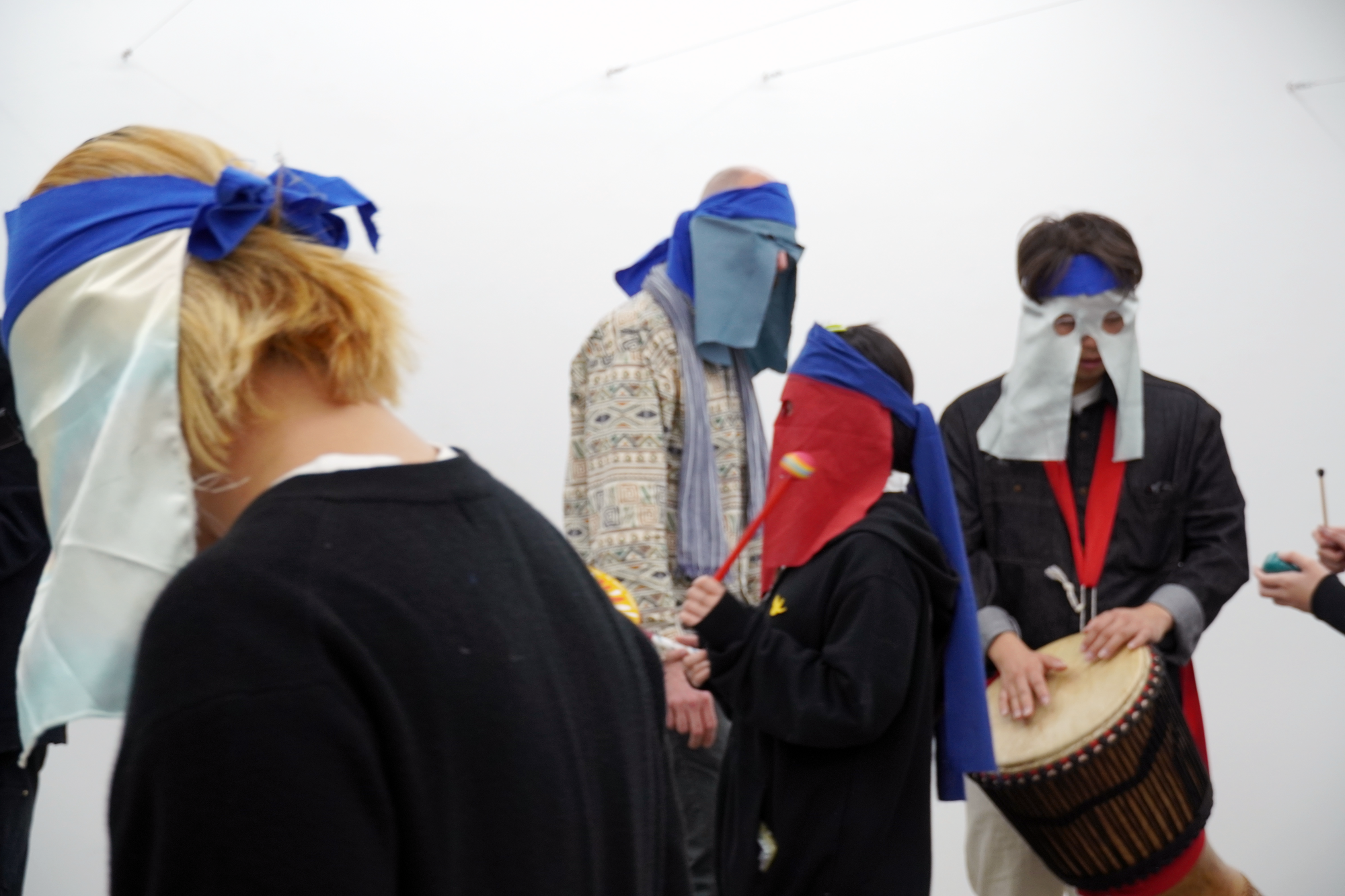
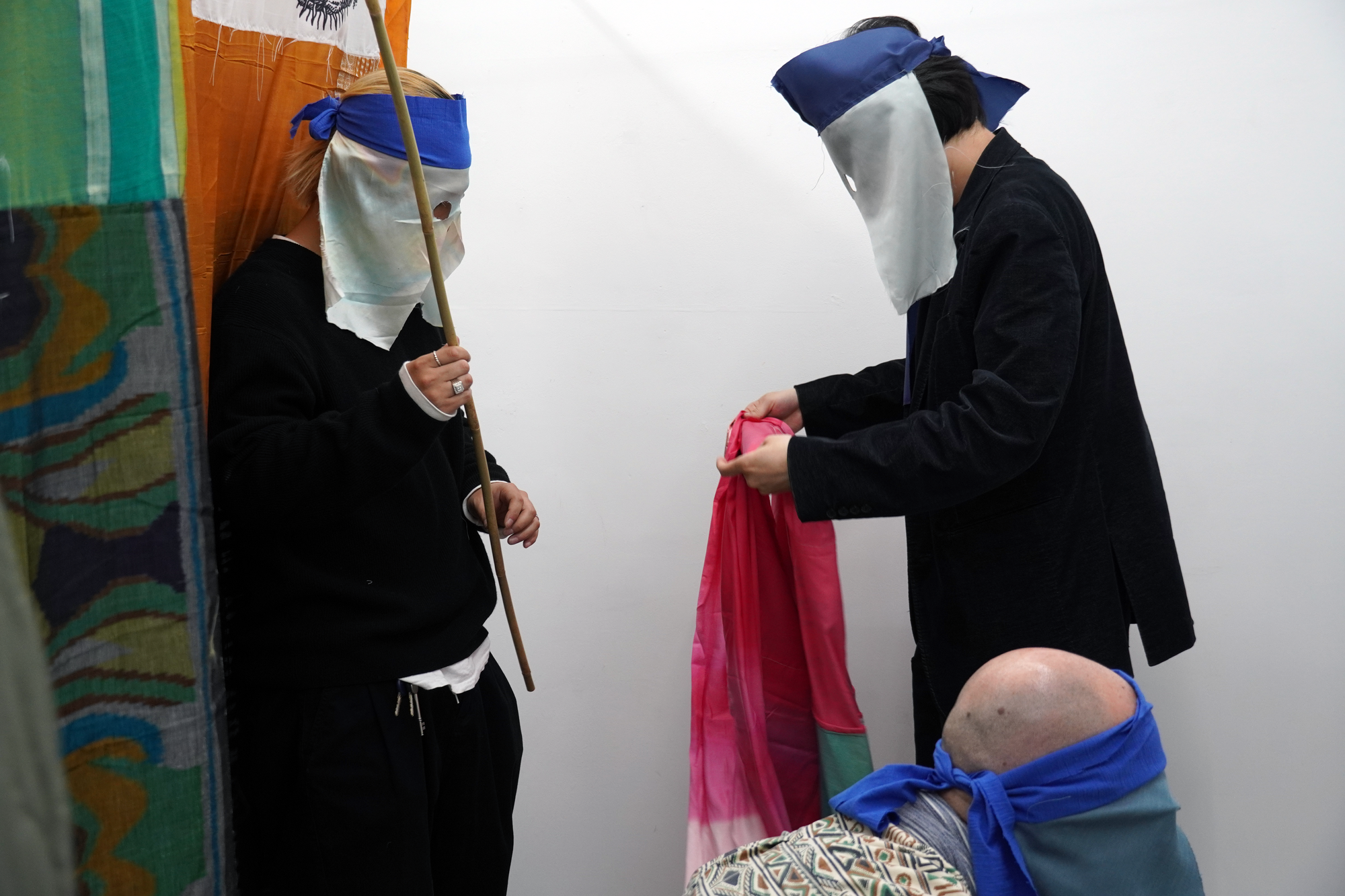
그러나 《Spirit Session》의 설치는 전시장 안에서 고정된 형태로 완성되지 않는다. 오프닝 당일, 참가자들은 서울함에서 진행되는 Feral Choir Workshop을 통해 자신의 목소리를 발견하고, 대나무 봉에 설치된 텍스타일 배너를 함께 들고 SPACE TUM을 향해 이동한다. 행렬 속에서 이어지는 목소리와 움직임은 전시장에 도착한 뒤 설치와 결합하며, 공간을 일시적인 공동의 의례적 환경으로 변화시킨다.
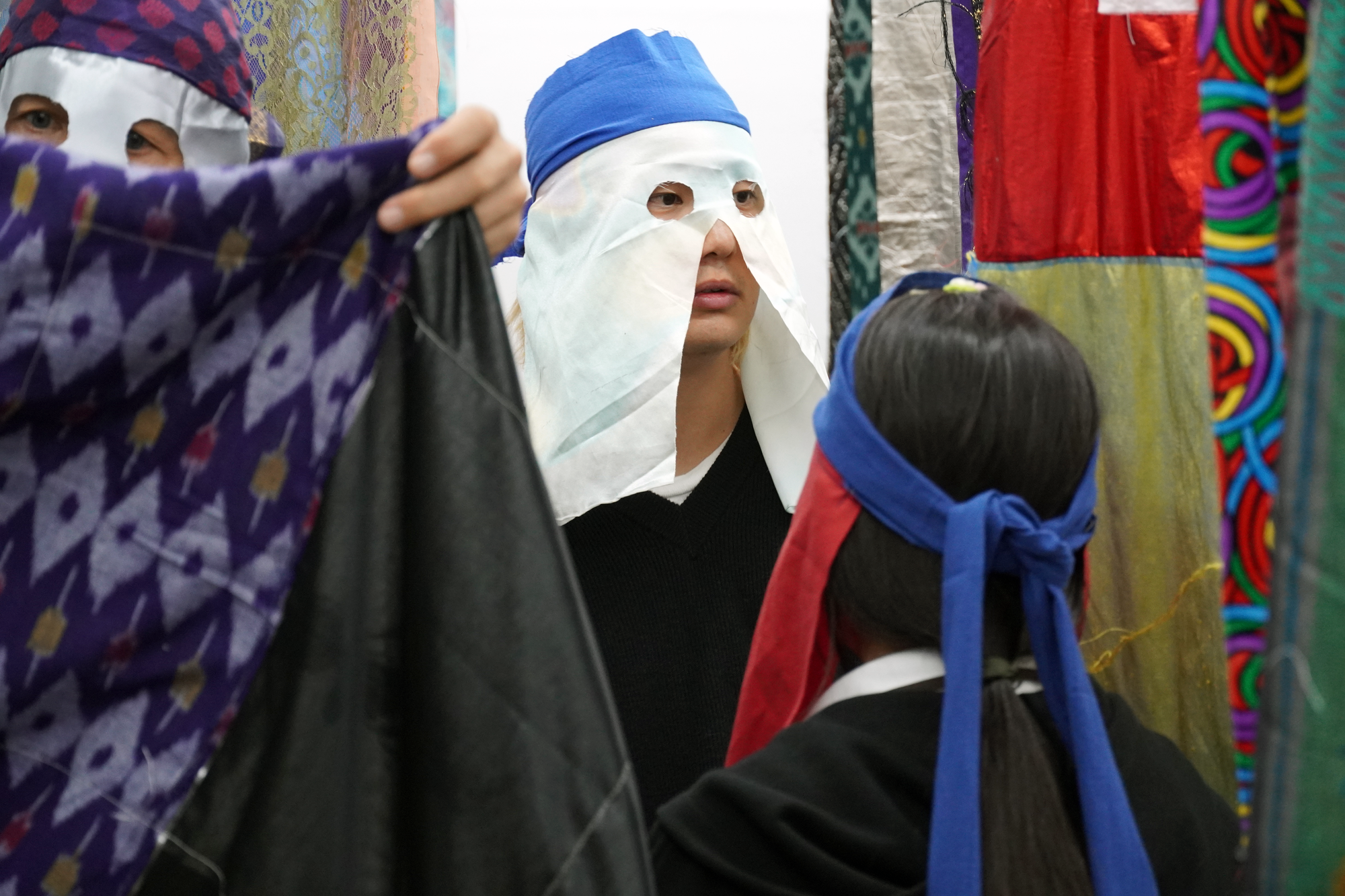
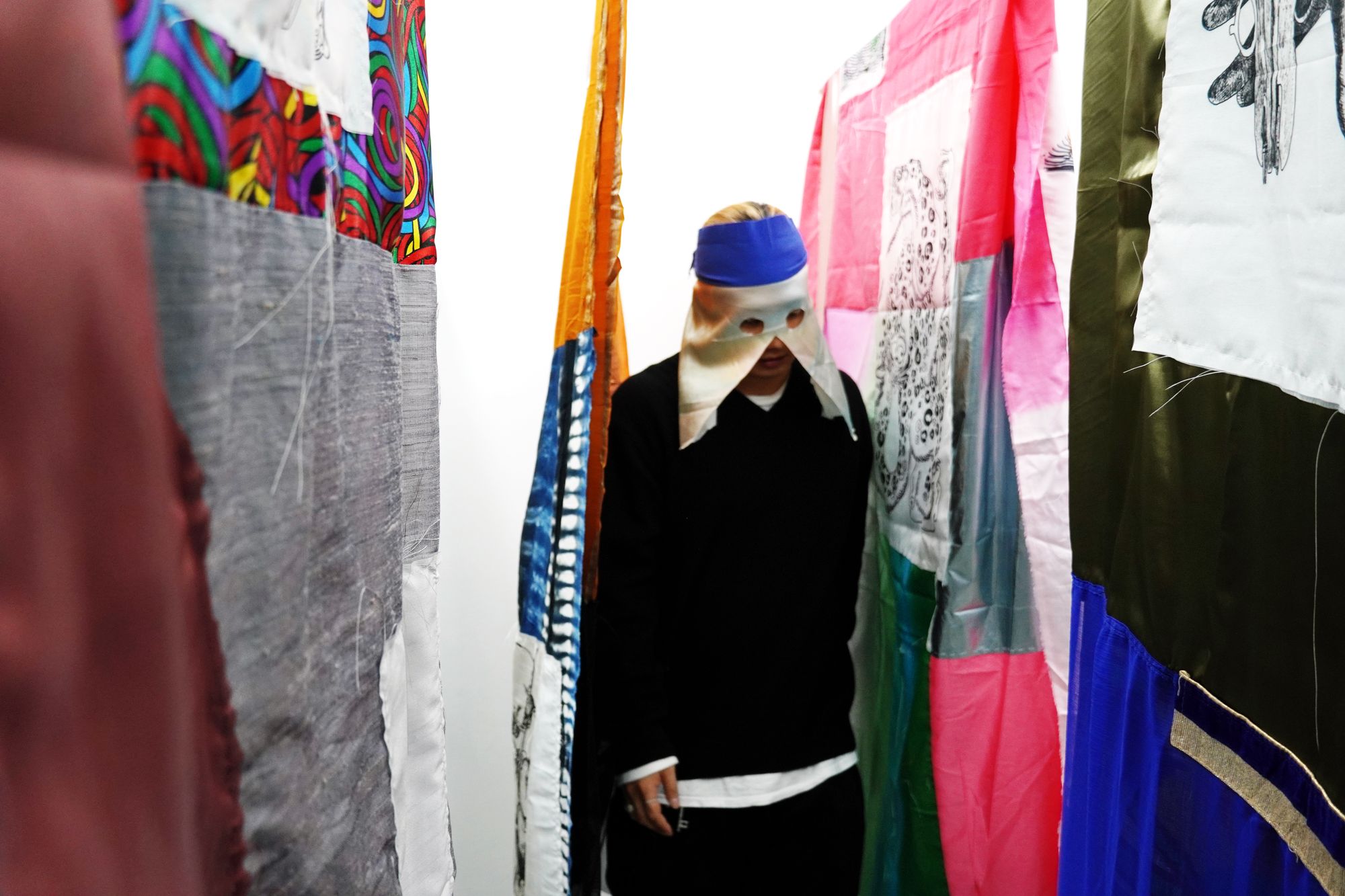
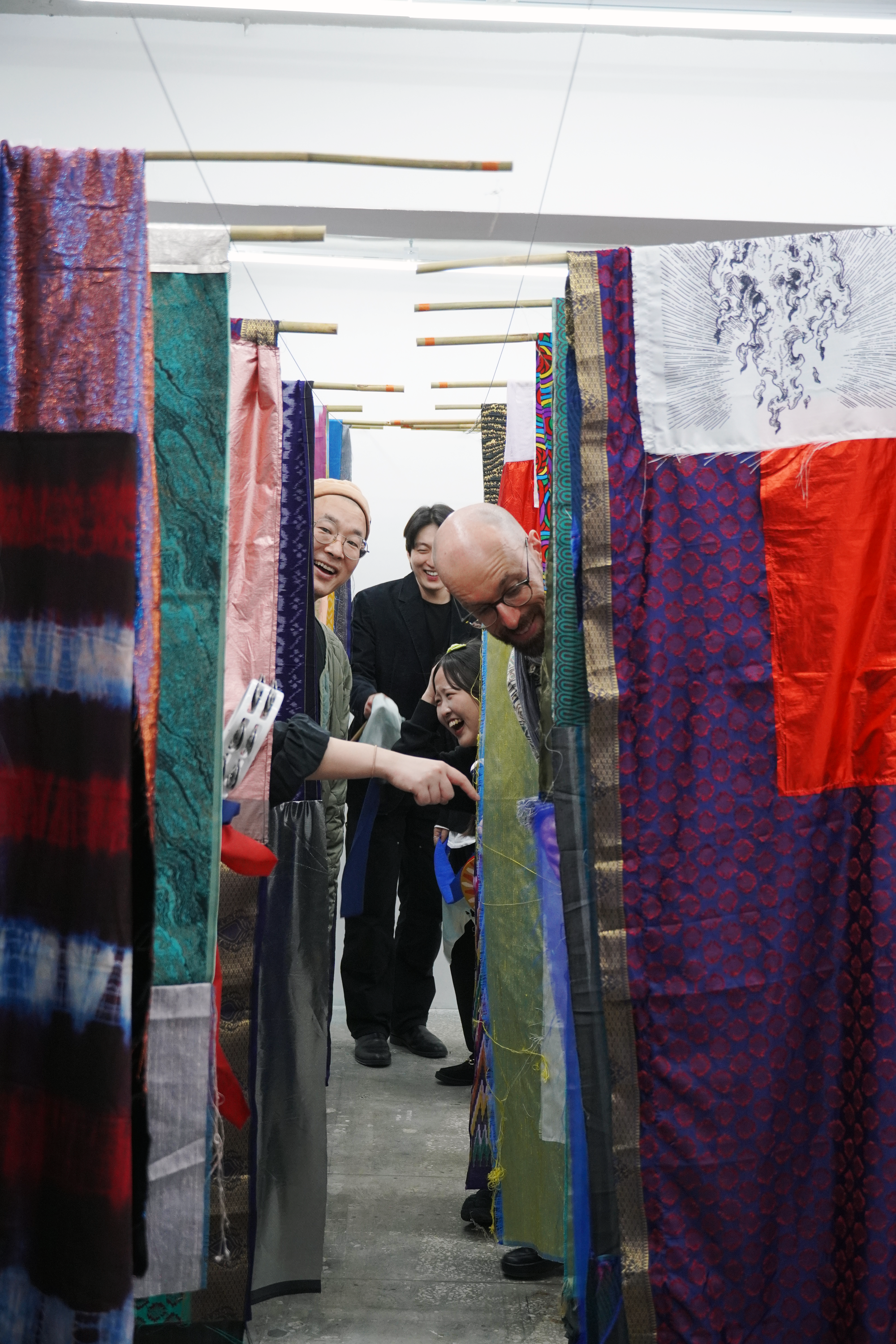
관객은 이 과정에서 완성된 작품을 바라보는 외부의 관찰자가 아니라, 작품을 이동시키고 소리를 만들며 설치를 활성화하는 하나의 존재가 된다. 《Spirit Session》은 직물과 이미지, 목소리와 몸의 움직임이 서로 만나며 만들어내는 집단적 경험을 통해, 함께 존재하는 순간이 하나의 공간을 어떻게 변화시키는지를 탐색한다.
Images originating from different periods and places meet again on textile. Medieval imagery, ritual gestures, enigmatic hands, fantastic creatures, ancient instruments, and symbolic forms do not reconstruct a single historical narrative or cultural tradition. Instead, they coexist within a shared visual environment shaped by different memories, materials, and sensibilities.
Jérôme Chazeix begins by drawing and redrawing these images before transferring them onto textile. They are then combined with fabrics from his personal collection, gathered through travels and residencies in Japan, Indonesia, India, China, and elsewhere. Sarongs, sari fragments, and other textiles carrying different histories are assembled into individual panels, which are in turn connected and layered to form a larger installation extending throughout the exhibition space.
Yet the installation of Spirit Session is not completed as a fixed object inside the gallery. On the opening day, participants will gather at Seoulham for a Feral Choir Workshop, developing collective vocal practices while carrying textile banners mounted on bamboo poles. From there, the group will move together in procession toward SPACE TUM. As voices, bodies, and textiles enter the exhibition space, the installation is activated and temporarily transformed into a shared ritual environment.
Within this process, the audience is no longer positioned solely as an observer of a completed work. Participants carry the work, produce sound, move through public space, and become part of the installation itself. Through the encounter between textile, image, voice, and bodily movement, Spirit Session explores how the act of being together can transform a space into a collective experience.
※ This text has been translated and adapted by SPACE TUM based on Jérôme Chazeix’s artist statement and exhibition introduction.
⧉ OPENING DAY | 2026.10.15.(Thu)
• 16:00 — SEOULHAM
Feral Choir Workshop
• 17:30 — SEOULHAM → SPACE TUM
Collective Procession
• 18:00 — SPACE TUM
Installation & Live Performance Opening
천 위에 작은 악기 하나가 있다. 시스트럼. 오래전 누군가의 손에서 흔들리며 소리를 냈을 물건이다. 지금은 검은 선 몇 개로 남아 천과 함께 접혔다 펼쳐진다. 바람이 불면 몸체가 일그러지고, 천이 처지면 악기도 함께 기울어진다. 소리를 내던 사물이 이렇게 조용한 그림이 되고 나면 이상하게도 그 소리가 어디로 갔는지 생각하게 된다.
악기 주변으로는 서로 다른 천이 붙어 있다. 한쪽은 오래 몸에 닿았을 법하게 부드럽고, 바로 옆의 표면은 아직 팽팽하다. 빛을 통과시키는 정도도, 무늬가 촘촘한 정도도 제각각이다. 어느 부분에서는 낯선 그림의 끝과 천의 문양이 우연히 이어져 하나의 무늬처럼 보인다. 조금 떨어져 서면 경계가 희미해지고, 몇 걸음 다가가면 바느질 자국과 천의 끝이 다시 보인다. 멀리 떨어져 있던 것들은 이곳에서 몇 땀의 실을 사이에 두고 이웃이 된다. 원래부터 서로를 알고 있었던 것처럼 보일 때도 있고, 아무리 보아도 좀처럼 어울리지 않을 때도 있다. 어느 쪽이 더 자연스러운지는 보는 거리에 따라 달라진다. 별을 볼 때와 비슷하다. 멀리 흩어진 점 몇 개 사이에 선을 그으면 갑자기 곰도 생기고 사람도 생긴다. 그 선은 하늘에 있었던 것인지, 바라보던 사람의 머릿속에 있었던 것인지 알기 어렵다.
이 천들이 서울에 놓이자 다른 그림 하나가 슬며시 따라붙는다. 대나무 끝에서 길게 흔들리는 여러 장의 천. 오래된 마을의 나무에 묶여 있던 색색의 천을 떠올릴 수도 있고, 누군가를 보내는 길에 줄지어 움직이던 만장을 생각할 수도 있다. 서로 전혀 다른 데서 생겨난 것들이지만 모양이 잠깐 닮았다. 한쪽을 다른 한쪽의 이름으로 부를 만큼 같지는 않아서, 오히려 두 장면 사이를 자꾸 왕복하게 된다. 멀리서 건너온 것은 도착한 곳에서 뜻밖의 친척을 만날 때가 있다. 'ritual'이라는 말도 서울에 도착하면 조금 달리 들린다. 한국어의 '의례'에는 이미 오래 반복해 온 순서가 있을 것 같다. 누가 어디에 서고, 어떤 차례에 무엇을 해야 하는지 어느 정도 알고 시작하는 장면이 자연스럽게 떠오른다. 《Spirit Session》에서는 그런 설명서보다 사람이 먼저 모인다.
처음 보는 사람들이 대나무 봉을 잡는다. 누군가는 소리를 내고, 옆에서는 그 소리를 듣는다. 긴 천이 머리 위로 올라가고 사람들이 걸음을 옮긴다. 특별한 일이라고 하기에는 단순한 움직임인데, 몇 사람이 같은 방향으로 걷기 시작하면 눈앞의 모습이 조금 달라진다. 빈손으로 나란히 걷던 사람들에게 긴 천 하나씩을 쥐여주면 더 그렇다. 바람을 받은 천이 위아래로 움직이고, 맨 앞과 맨 뒤가 생긴다. 지나가던 사람이 한번 돌아본다. 축제처럼 보일 수도 있다. 시위나 종교 행사를 떠올릴 수도 있고, 서울에서는 오래된 장례 행렬의 한 귀퉁이가 겹쳐 보일지도 모른다. 이름보다 모양이 먼저 생기는 순간이다.
행렬은 망원한강공원의 서울함 앞에서 출발한다. 처음 만난 사람들이 대나무 봉과 긴 천을 들고 강가에 모인다. 발걸음을 맞춰야 하는 것은 아니다. 그런데 멀리서 보면 잠시 한 무리가 된다. 걷는 방향 때문인지, 함께 내는 목소리 때문인지, 머리 위에서 흔들리는 천 때문인지 하나만 꼽기는 어렵다. 몇 시간 뒤 이들은 각자의 길로 흩어진다.
강가를 떠나 망원의 안쪽으로 들어가면 풍경도 금방 달라진다. 강변에서는 멀리까지 보이던 것이 골목으로 들어서면 눈앞까지 가까워진다. 자동차가 지나고, 자전거가 비켜가고, 음식점과 상점의 간판이 머리 위로 겹친다. 시장에서 장을 보고 나오는 사람과 휴대폰으로 길을 찾는 관광객이 같은 횡단보도 앞에 멈춰 선다. 그 사이로 긴 천이 지나간다. 전시장으로 향하는 방법치고는 조금 이상하다. 보통은 사람이 작품을 찾아간다. 주소를 확인하고, 건물에 들어가 계단을 올라 문을 열면 작품을 만난다. 이날에는 작품의 일부가 먼저 문밖에 나가 있다. 한강까지 나갔던 천을 사람들이 들고 다시 망원 안쪽으로 데려온다. 무엇이 전시장 안에 있고 무엇이 바깥에 있는지 잠시 뒤섞인다.
천이라는 물건은 원래 이동에 익숙하다. 몸에 감기고, 접히고, 말리고, 가방 안에 들어간다. 한 장소에서 다른 장소로 옮기기도 어렵지 않다. 작가의 손에 모인 천에도 그런 시간이 남아 있을 것이다. 누군가의 몸 가까이에 있었던 천이 다른 도시의 작업실에 놓이고, 다시 서울로 온다. 그날만큼은 사람들의 경로가 천 주변에 생긴다. 평소라면 서로 다른 목적지로 갔을 사람들이 몇 블록 정도 같은 방향을 걷는다. 천이 사람을 끌고 간다고 말하기에는 과장이겠지만, 손에 긴 천을 쥔 순간 그들의 이동은 이전과 같은 모습으로 보이지 않는다.
여러 지역에서 건너온 것들을 한자리에 펼쳐두었을 때 가장 먼저 생기는 것은 조화보다 오독일지도 모른다. 어떤 사람에게 특정한 무늬는 익숙한 생활용품의 일부이고, 다른 사람에게는 처음 보는 장식이다. 누군가는 대나무에 매달린 천을 보고 서낭의 풍경을 떠올리고, 누군가는 아무것도 떠올리지 않을 것이다. 같은 표면 앞에서 각자 다른 장소를 생각한다. 작가가 가져온 기억만 천에 남는 것이 아니다. 바라보는 쪽에서도 제각기 무언가를 가져와 그 위에 얹는다. 망원에서는 그런 겹침이 별로 특별하게 느껴지지 않을 수도 있다. 오래된 시장 옆으로 새 간판이 걸리고, 몇 해 전에는 없던 가게가 오래된 철물점과 한 골목을 나눈다. 주민들이 오가는 사이로 다른 언어를 사용하는 방문객들이 지나간다. 익숙하던 것이 사라지고, 낯설던 것이 어느 순간 동네의 일부가 된다. 거리를 걷는 동안에는 어느 것이 먼저였는지 굳이 나누어 생각하지 않게 된다.
천도 그 사이를 지난다. 전시장에 들어온 뒤에는 더 크게 이어진다. 몇 걸음 떨어져 보면 커다란 한 면처럼 보이지만 가까이 다가가면 조각마다 시간이 다르다. 얇은 부분에서는 뒤편의 무늬가 비치고, 두꺼운 부분은 빛을 막는다. 색이 맞닿고, 바느질 선이 방향을 바꾸고, 하나였던 것이 다시 여러 개가 된다. 멀리 볼 때와 가까이 볼 때 같은 작품이 조금씩 다른 수를 가진다. 거리에서는 바람을 받던 천이 실내로 들어오자 움직임을 줄인다. 얼마 전까지 사람의 손 위에 있던 것이 이번에는 머리 위에 머문다. 조금 전의 행렬을 보지 못한 관객에게는 처음부터 그 자리에 있었던 설치처럼 보일 수도 있다.
그 어딘가에 처음 보았던 시스트럼도 있다.
여전히 소리는 나지 않는다. 대신 이곳까지 오는 동안 천 주변에서는 사람의 목소리가 있었다. 이름도 모르던 사람들이 서로의 소리를 들었고, 몇 블록을 함께 걸었다. 소리를 내던 오래된 사물이 그림으로 남아 조용해진 사이, 아주 다른 장소에서 다른 몸들이 그 빈자리를 채운 것처럼 보이기도 한다.
얼마 뒤 사람들은 흩어지고, 바람도 멈춘다. 서울에서 이 천은 서낭의 색과 잠깐 닮았고, 만장이 지나가던 길을 떠올리게 했으며, 강가를 떠나 망원의 골목으로 들어왔다. 그중 어느 것도 천의 표면에 선명한 자국으로 남지는 않을 것이다. 다음 장소에서 다시 펼쳐졌을 때에는 다른 풍경이 먼저 달라붙을지도 모른다. 그곳의 누군가는 우리가 알지 못하는 오래된 장면을 여기에서 발견할 것이다.
천은 다시 접힌다.
지나온 길을 보이지 않는 쪽으로 한 겹 더 접어 넣으면서.
글. 전혜수
《Spirit Session》 Jérôme ChazeixThere is a small instrument on the fabric: a sistrum. Once, it would have sounded in someone's hand. Here, it survives only as a few dark lines, folding and unfolding with the cloth beneath it. When the wind catches the fabric, its body bends; when the textile slackens, the instrument tilts with it. Once an object that produced sound, it has become a quiet image. Looking at it, one begins to wonder where that sound has gone.
Around it, fabrics of different textures are stitched together. One feels softened by use, as if it had once rested against a body; the surface beside it is still taut. Some let light pass through, others hold it back. Patterns differ in density and scale. In places, the edge of a printed image happens to meet the motif of another textile so neatly that the two briefly appear to form a single design. Step back and their boundaries begin to blur. Move closer and the seams, frayed edges, and separate pieces return to view. Things once far apart now sit beside one another, joined by only a few stitches. Sometimes they look as though they had always belonged together; at other moments, they remain stubbornly mismatched. The impression changes with distance. It is a little like looking at stars: draw lines between scattered points and suddenly a bear or a human figure appears. It is difficult to know whether that line was ever there, or whether it was drawn afterward by the person looking.
Once these fabrics arrive in Seoul, another set of images begins to gather around them. Long strips of cloth moving from the ends of bamboo poles may recall coloured fabrics once tied to village trees or shrine sites, or the long banners that accompanied funeral processions. These images come from entirely different places, yet for a moment their forms resemble one another. They are not similar enough for one to be comfortably named after the other, and so the eye keeps moving between them. Things that travel a long way sometimes arrive to find unexpected relatives. The word "ritual" also sounds slightly different once it reaches Seoul. Its closest Korean equivalent, uirye, tends to suggest something already structured: a sequence repeated over time, with an inherited sense of where one stands, what comes next, and how an action should be carried out. In Spirit Session, however, people seem to come before any such instructions.
Strangers take hold of bamboo poles. One person makes a sound, someone nearby listens. Long pieces of cloth rise overhead and the group begins to move. The action is simple enough, yet once several bodies start walking in the same direction, the scene changes. A group walking empty-handed does not look quite the same as a group carrying long banners above their heads. The wind catches the fabric. A front and a back begin to form. Someone passing by turns to look. The scene might resemble a festival, a demonstration, a religious procession, or, in Seoul, perhaps even a fragment of an older funeral rite. The shape of the procession seems to arrive before its name does.
The procession begins at Seoul Battleship Park in Mangwon Hangang Park. People meeting for the first time gather by the river with bamboo poles and lengths of fabric. They need not keep the same pace. Yet from a distance, they briefly become a group. It is hard to say whether this comes from the direction of their steps, their mingling voices, or the fabric moving overhead. In a few hours, they will each go their own way.
Once the procession leaves the riverside and heads further into Mangwon, the surroundings quickly change. Along the river, the view stretches into the distance; inside the neighbourhood, everything moves closer. Cars pass, bicycles slip by, restaurant signs and shopfronts gather overhead. Someone leaving the market with groceries may stop at the same crossing as a visitor checking directions on a phone. Through this ordinary traffic, the long pieces of fabric move. It is an unusual way to arrive at an exhibition. Usually, a visitor goes in search of the work: finds the address, enters the building, climbs the stairs, opens a door, and encounters the exhibition inside. On this day, part of the work is already outside. The fabric has travelled as far as the river before being carried back into Mangwon by the people holding it. For a while, it becomes difficult to say exactly where the exhibition begins.
Fabric, after all, is accustomed to travel. It wraps around bodies, folds, rolls, disappears into luggage, and moves easily from one place to another. The textiles gathered by the artist must carry some trace of such movement: time spent close to someone's body, a period in another city, a stay in a studio, and eventually Seoul. For a short while on this particular day, the routes of several people gather around the fabric. People who would otherwise be heading toward different destinations walk together for a few blocks. It would be an exaggeration to say that the cloth leads them, but once they hold it above them, their movement no longer looks quite the same.
Perhaps the first thing produced when objects from different places are laid out together is not harmony, but misreading. A particular pattern may be part of an ordinary household object to one person and a completely unfamiliar ornament to another. Someone may see fabric tied to bamboo and remember a village shrine; someone else may remember nothing at all. The same surface sends different viewers elsewhere. The memories carried by the artist are not the only ones that attach themselves to the work. Those who look at it bring their own images and lay them, however briefly, over the fabric. In Mangwon, this kind of overlap may not feel especially unusual. A new sign appears beside an old market. A shop that did not exist a few years ago shares a narrow street with a hardware store that has been there much longer. Residents move through the same streets as visitors speaking other languages. Familiar things disappear, and what once felt unfamiliar gradually becomes part of the neighbourhood. While walking, one rarely stops to decide which of these came first.
The fabric passes through the same streets. Inside the gallery, the pieces are joined on a larger scale. From several steps away, they read as a single expanse. Up close, each section begins to keep its own time. Thin fabric reveals the pattern behind it; heavier material blocks the light. Colours meet, seams change direction, and what appeared to be one becomes several again. The same work seems to contain a different number of parts depending on how far away one stands. Outside, the fabric moved with the wind. Indoors, its movement quiets. What had been held above people's hands now remains suspended overhead. To someone who did not see the procession, it might seem as though it had always been there.
Somewhere among the fabric is the sistrum from the beginning.
It is still silent. And yet, on the way here, there were voices around it. People who did not know one another listened to each other and walked the same few blocks together. While an ancient sound-making object remained quiet as an image, sound appeared elsewhere, in different bodies, in a different place. There is no need to recover what the sistrum once sounded like. Its missing sound has already returned somewhere unexpected: not from the instrument, and not from the distant past, but from human voices in present-day Mangwon.
Before long, the people disperse and the wind falls still. In Seoul, the fabric briefly resembled the colours of a village shrine, recalled the passage of funeral banners, and travelled from the riverside into the narrow streets of Mangwon. None of these encounters will leave a clearly visible mark on its surface. The next time the fabric is unfolded somewhere else, another landscape may be the first to cling to it. Someone there may recognise in it an old image that we do not know.
The fabric will be folded again,
with one more travelled path tucked into the side we cannot see.
Text by Hyesoo Jeon
Jérôme Chazeix
제롬 샤제는 복합적인 설치 작업을 통해 서로 다른 요소들이 뒤섞인 하이브리드한 평행세계를 구축한다. 그는 다양한 매체를 결합하고 중첩하여 관객이 완전히 몰입할 수 있는 환경을 만들고, 그 안에서 퍼포머들은 안무된 혹은 즉흥적인 퍼포먼스를 통해 공간을 점유한다. 그의 작업은 퍼포머와 관객 모두가 주변의 오브제들과 관계를 맺으며 하나의 평행세계 속 주체가 되는 '총체적 예술'을 지향한다. 관객은 새로운 영성에 대한 욕망과 사회적 현실 사이를 오가며, 의미를 탐색하는 경험 속으로 이끌린다.
제롬 샤제의 작업은 동시대적 의미의 게잠트쿤스트베르크(Gesamtkunstwerk, 총체예술)라 할 수 있다. 그의 예술 실천의 중심에는 서로 다른 매체들의 결합과 상호 참조가 있다. 조각, 영상, 음악, 의상은 그의 설치, 환경, 퍼포먼스를 구성하는 핵심 요소이며, 이러한 여러 분야의 상호작용과 융합을 통해 복합적인 장면을 만들어낸다.
제롬 샤제(프랑스·독일)는 1976년 프랑스에서 태어났으며, 2000년부터 베를린을 기반으로 활동하고 있다. 1994년부터 2002년까지 생테티엔 장 모네 대학교 시각예술학부에서 수학하며 자신의 예술 실천을 바탕으로 총체예술에 관한 박사 논문을 집필했다. 동시에 1995년부터 2000년까지 생테티엔 국립미술학교(École des Beaux-Arts de Saint-Étienne)에서 공부하여 DNSAP 학위를 취득했으며, 2000년부터 2004년까지 베를린 바이센제 예술대학교에서 카타리나 그로세(Katharina Grosse)의 마이스터슐러(대학원 과정)로 활동했다.
그는 다수의 레지던시와 예술 지원 프로그램에 선정되었으며(2023년 독일 국립 예술기금 Kunstfonds 지원 포함), 중국(2회), 콩고, 캐나다(2회), 노르웨이(2회), 네덜란드, 오스트리아, 독일(5회), 스위스, 리투아니아 등에서 레지던시에 참여했다. 또한 2019년 라고스 비엔날레(Lagos Biennale), 2022년 킨샤사의 비엔날레 양고(Biennale Yango) 등 국제 전시에 참여했으며, 최근 개인전으로는 쿤스트페어라인 부흐홀츠(2026), 쿤스트러하우스 괴팅겐, Centre d'Art Vaste et Vague(캐나다)(2025), 쿤스트페어라인 로스토크, Ferme-Asile(스위스 시옹)(2024), Industra Brno(체코)(2023), Neu Deli Leipzig, Fabrikraum Vienna(오스트리아)(2022), Label201 Rome(이탈리아)(2020) 등이 있다.
Jérôme Chazeix builds complex installations which create hybrid parallel worlds. He combines and superimposes different mediums in order to reveal sets in which the public dives into total immersion and in which actors, through alternately choreographed or spontaneous performances, take possession of the device. These works of art are meant to be "total" in the sense that performers and audiences both become protagonists of parallel worlds finding a match in the objects around them. The public gets carried away, enveloped, in search of meaning, halfway between new age desire and social reality.Jérôme Chazeix’ s works are contemporary syntheses of the arts (Gesamtkunstwerke). The focus of his artistic oeuvre lies in the combination of different media and their cross-references. Sculptures, videos, music and costumes are preferred elements of his artistic work and its installations, environments and performances. The interplay and the fusion of these disciplines results in a complex scenario.
Jérôme Chazeix (french german) was born in France in 1976 and has lived and worked in Berlin since 2000. Between 1994 and 2002 he studied at the faculty of visual arts of the Jean Monnet University of Saint-Etienne and wrote a thesis on total artworks based on his own praxis. Between 1995 and 2000 he continued his studies at the École des Beaux-Arts de Saint-Etienne where he obtained his DNSAP diploma. Between 2000 and 2004 he was a "Meisterschüler" (post-graduate) with Katharina Grosse at the Berlin School of Fine Arts Weissensee. He has been selected for numerous grants (like in 2023 the Kunstfonds german national grant) and Artist Residencies in China (2), Congo, Canada (2), Norway (2), Nederland, Austria, Germany (5), Switzerland and Lithuania. His work is presented internationally, for example in the Lagos Biennale 2 (2019) and the Bienniale Yango in Kinshasa (2022). His last solo exhibitions were in Kunstverein Buchholz (2026), Künstlerhaus Göttingen, Centre d´Art Vaste et Vague (CA) (2025), Kunstverein Rostock and Ferme-Asile, Sion (CH) (2024), Industra Brno (CZ) (2023), Neu Deli Leipzig, Fabrikraum Vienna (AT) (2022), Label201 Rome (IT) (2020).
Artist | Jérôme Chazeix @zeixberlin
Curatorial Text | Hyesoo Jeon @jeon_hyesoo
Graphic Design | Hantol
Sound Design | Konstantin Heuer
Installation Assistance | Sunjin Park @art_sunjin
Performance Venue Support | Seoulham @seoul_battleship_park
Supported by | Liebelt Stiftung Hamburg
Hosted & Organized by | SPACE TUM @art.space.tum